
"Astronomy" is a scientific field; it is the study of celestial bodies and their objective relations with physics and the observable universe.
These two fields are referenced heavily in the storytelling and worldbuilding of Moonset. Why my goodness, this is me! Why my goodness, this is me!What is a Planet?
Fox
Fox • Fox ͙͘͡★star
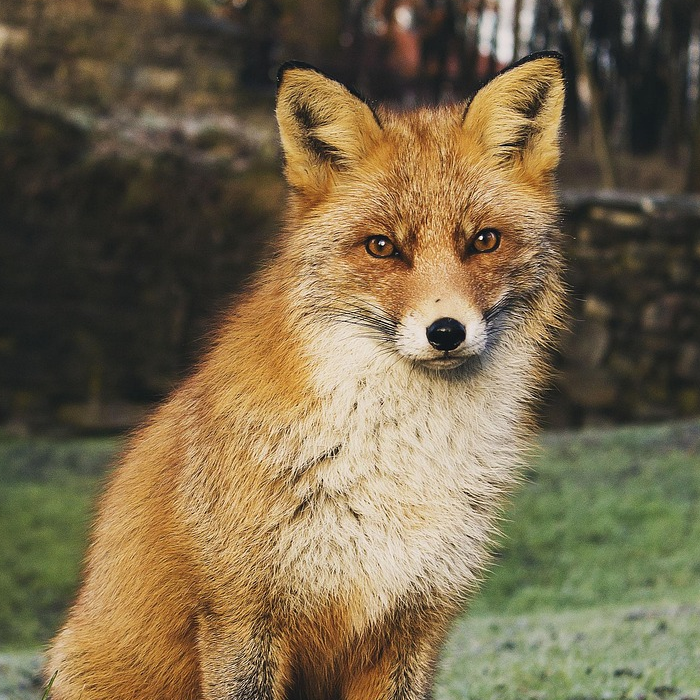
The Founder and Master of Cope
Writer
Species
Fox(star)
Gender
Girl
Height
Long
Sign
Capricorn
Fave Movie
The Fantastic Mr. Fox
Fox
Fox • Fox ͙͘͡★star
The Founder and Master of Cope
Writer
Species
Fox(star)
Gender
Girl
Height
Long
Sign
Capricorn
Fave Movie
The Fantastic Mr. Fox
The Moon is a Miracle
The main heroine of the story is named Tsukiko. In Japanese kanji, this name is "月子", the two characters respectively meaning "Moon" and "child". She has assumed the surname Kibou, as taken from the KIBOU Nation, to whom she is beholden to. In Japanese kanji, that name is "希望"; this word means "hope", but in the context of Moonset it is also a somewhat complicated translingual pun. The second kanji 望 is a combination of three smaller kanji put together, call radicals. The top right one is the same 月 which gives us "tsuki" for moon. If you trace the etymology, this kanji is derived Chinese where the three components were originally meant to be pictograms for a person standing on the ground, an eye, and the moon, and the character meant "looking at." (It ending up in the word for "hope" is on account of a hope being something you can look forward to). Fitting, that the name of this astral cult should in of itself depict a stargazer.When pitted against the total line up of satellites our Solar System - let alone the universe - has to offer, Earth's Moon seems very nondescrept. However it is more unique than initially seems: for one thing, she's the only rounded moon in the inner solar system. Mercury and Venus have no moons at all, and while Mars does have two - Deimos and Phobos - they are exceedingly small and potato-shaped in comparison. Past this, however, the Moon is a statistical anomaly in that she is startingly large.
Now, not just in terms of literal mass, of course; Luna is fairly average sized. However, the other satellites of similar size to her are orbitting much, much bigger planets. Take, for example, Ganymede, the largest moon of Jupiter and in the Solar System. Ganymede has a diameter of 5268 kilometers, quite a bit bigger than our moon's 3476 km. However, Jupiter itself has a diameter of 142984 kilometers. If we do some math, that means Ganymede is ~3.69% of the size Jupiter, which is to say Jupiter is about 27 times bigger. If you repeat this process with the other giants and their biggest moons, you learn that Saturn is 23.4 times bigger than Titan, Uranus is 32 times bigger than Titania, and Neptune is 18 times bigger than Triton.
Earth, on the other hand, is only around three-and-a-half times bigger than the Moon.
On account of how incomprehensibly dense the gas/ice giants are, the differences here get even more extreme if you try measuring by volume: Titan manages to make it all the way up to being 1/4200th of Saturn's mass, while the other three mentioned are - respectively - 1/20000th, 1/25000th, and 1/47850th the volumes of their parent planets. Moon, on the other hand? It's at about 1/49th the Earth's volume. To compare her to the closest moons to her, Phobos - the larger of the pair - only stretches 22 kilometers to Mars' 6780, and has about 1/30000000th the volume. The Moon - for her place in the universe - absolutely huge. Almost without contest.
Enter Charon, the largest satellite of Pluto. Pluto and Charon may as well be twins compared to other planet-moon duos we know of: Pluto's diameter is 2377 km to Charon's 1212, meaning Pluto isn't even twice as big. In terms of volume, Charon has 1/8th that of Pluto. Charon is so big that back in the early 2000s, before the IAU announced the "dwarf planet" disignation, one of the other ideas floated was to classify Pluto and Charon as a binary planet: Two planets which orbit each other, while orbiting the Sun. This of course didn't end up making it into the official nomenclature, so by most counts Charon is still just a moon, but mathmatically? The binary planet idea is right on the money
Astronomy has a concept called a barycenter, which is the center of mass two of things in space that are engaged orbit, and is the point where the orbit technically lies. So for example the Earth doesn't technically orbit the Sun, instead both the Sun and the Earth technically orbit around the Sun-Earth barycenter. However since the Sun is so very big and the Earth is so very small in comparison, said Sun-Earth barycanter is just in the middle of the Sun anyway, so it doesn't make a difference. The same applies to the planets and their very-tiny-by-comparison moons. However Pluto and Charon break that rule! The Pluto-Charon barycenter is not in the middle of Pluto! It is outside both objects! They legitimately orbit each other as equals!
So what of the Earth and the Moon, then? There is a niche but not necessarily unscientific following for Earth-Luna to be called a binary planet system too. However the barycenter measure fails that crowd, as the Earth-Moon barycenter still lays inside of Earth's mass. It makes it about 75% of the way to the surface though, and that's much more than any other planet-moon barycenter which are mostly just within their planet's core. The thing is there's a good arguement that you don't have to make the barycenter the end-all-be-all determiner, though! You see as it turns out, Jupiter is just big enough and just far away enough from the Sun that the Sun-Jupiter barycenter just barely escapes the Sun's mass. So, by that logic, the Solar System should actually be the Sol-Jovian System, because the Sun and Jupiter are both orbitting a non-Sun point. But of course, that's pretty laughable of an idea to actually entertain.
Our Moon is certainly something special, so special that there's not really a good way to scientifically parse it. She's just an oddity, our little unique gift. How come?
To make a long history of scientific theories short, the current hypothesis is that the Moon is the hollowed corpse of half a planet. The "giant impact hypothesis" posits that early in the Solar System's life span, a "proto-Earth" in an unstable orbit collided with a Mars-like planet dubbed Theia; the resulting impact caused the formation of the Earth as know it due to its gravity merging it with some pieces of Theia. Other parts of the planet exploded with such velocity that they escaped orbit, while the remains coalesced into the Moon. Like most things in astronomy, our understanding of these events are not perfect, and there remains some unexplained discrepencies in even the most advanced models of the Theia impact; nonetheless, it remains the prevailing hypothesis on the Moon's formation. This is contrast to most satellites, which come to form from either leftovers during a planet's creation or passing objects which are captured by a planet's orbit.
I didn't have a good spot to tie this in with everything else, but did you know that the eclipse is also a cosmic coincidence? There is no underlying mechanism which causes the total solar eclipse to occur. It is possibly simply because it so happens that the Sun is both 400 times bigger and 400 times farther from Earth than the Moon. The Moon slowly gets further away from Earth as the cosmic scale of time goes on. In six or seven hundred million years, the total solar eclipse will no longer be able to occur. Us getting to see eclipses seems like just lucky chance...
You've likely heard the term "Fermi paradox": said paradox being, if we know intelligent life (or even just life in general) can exist, why can't we find anymore of it? Many solutions of varying complexity have been floated, but amongst them is the "rare Earth hypothesis". In essence, the conditions which caused life are extremely unlikely to occur, hence Earth being the only place in the universe with life that we know of. One factor of this could be the tidal activity of the Earth - stimulated by the Moon's presence affecting our gravity - kickstarting chemical development of life. Of course, this can't be said for certain, but it is perhaps the case that every beautiful thing that has ever happened in our nature and our lives is the end result of senseless cosmic violence.
Thank you, Theia. I love you, Moon.
What is a constellation?
Constellations feature heavily in Moonset. Each of the Scene Stars feature a specific constellation as the basis of their design motif, e.g Tsukiko as Foxfire embodies the constellation Vulpecula, Latin for "little fox", hence her fox motif. Ririka's magical powers centre the constellation motif even further, as she creates puppets and weaponry based on the image of constellations. This theme is not superfluous or solely aesthetic, as the constellation is a feature of culture I find intensely moving and inspiring.Constellations aren't real. There is no actual measure of what makes a constellation, they are completely imagined, completely arbitrary grouping of stars which work only from the POV of someone on Earth. In reality, the stars which make up a constellation are as far away from each other as they are from Earth. Their place in our sky is just cosmic chance, and yet we took those random lights and drew our stories and icons onto them.
If you're not already an astronomy nerd, you're probably familiar with just a few constellations. Most likely would be the twelve which make up the western zodiac: Aries (ram), Taurus (bull), Gemini (twins), Cancer (crab), Leo (lion), Virgo (maiden), Libra (scales), Scorpio (scorpion), Sagittarius (archer), Capricorn (seagoat), Aquarius (water bringer), and Piesces (fish). The Zodiac is based on dividing the path the Sun moves through the sky anuually - the ecliptic - into 12 sections, with each zodiac sign corresponding to a constellation within that divison. You may also know Orion, the giant huntsman from Greek mythology, which has a particularly distinct pattern and is useful for navigating and stargazing; Ursa Major, the big bear which contains the North Star (extra fact: This constellation is what the Arctic is named after, since "arkos" is Greek for bear. And thus "Antarctica" is the South Pole where you can't see the North Star. This also lines up with which one literal polar bears live in, but that's another coincidence...); or Sirius, which is a wolf, and therefor pretty rad.
The IAU keeps a list of recognised constellations for the purposes of easily describing which direction from Earth something is located in. This list total 88, about half of which came from Ancient Greece with the other being filled in as the southern half of Earth was explored. Of course, the thing about constellations being entirely imagined is that anyone - even you, reading this! - can make one up. Because of this there are many constellations which were described before the IAU's standardisation of them, which was published in 1930. Two of these are used within the main cast of Moonset alone: The Whispering Stars references Lilium and Cats Don't Dance references Felis, neither of which are on the IAU list. Other obsolete constellations I find particularly fun include Apes the bee (which is actually the exact same stars as Lilium, just as an example of how arbitrary constellation definitions are), Aranea the long-legged spider, Globus Aerostaticus the hot air balloon, Noctua the owl, and Officina Typographica the print shop (yes, all of these were real).
There are even more constellations which were used by different cultures. They're actually a fairly universal phenonmea, not at all limited to the Greek tradition which our modern western understanding of constellations is based. Many even used similar or the same star patterns as we know. Aboriginals in what is today Australia saw the Milky Way as a giant emu; the Dakota people interpreted the stars near the Summer Triangle as Agleœka, a salamander. Romanians saw the big dipper as a chariot, and the Norse as a woman's cart. I greatly recommend this website if you'd like to explore more on this topic.
What I find to be the most unique and interesting interpretation of the night sky from across anthropology, though, would have to be that of classical Chinese astrology. So much so that I must dedicate it its own section of this page.
The Three Enclosures and the KIBOU Nation
In ancient China, studies of astronomy divided the northern night sky by thirds into the “Three Enclosures”, or 三San垣Yuan: these overlapping thirds are known as 紫Zi微紫微垣 is near-universally translated to English as “Purble Forbidden Enclosure”, a name which sounds like nonsense due to a simple literal translation excluding the cultural significance of the name.
“紫微” was the name ascribed by classical China to the North Star, Polaris, which was the home of the Jade Emperor, ruler of Heaven (and the figure in Chinese mythological tradition). The characters mean “purple” and “small/subtle”. Purple being perceived as representing regality, the idea here was that a good ruler could use his mind to “rule without acting”, exerting such wise influence that everything would bend to his whim without the need for force, as the path of the other stars in the sky seem to bend around the fixed position of Polaris. This metaphor is directly attributed to Confucius, at the start of the second book of the Analects. (Although, as an aside, in this quote Confucius used a different much more literal word to describe the North Star, and in fact did not like the idea of purple being seen as a regal colour over the originally traditional vermillion.)
The use of “forbidden” in common translation corresponds to the Forbidden City, 紫Zi禁Jin城Cheng. (Notice the familiar first character. In this case, the name literally means “Purple Forbidden City.”) The Forbidden City was the sprawling, walled palace grounds of the emperors of the Ming and Qing dynasties, thus being the center of power in China for over 500 years. The reason this place was “forbidden” was because it was literally against the law to enter the emperor’s abode without permission, and the punishment was immediate execution. Hence, these two places are counterparts to each other: One palace of Heaven, one palace of Earth.
With the center enclosure being the Jade Emperor’s residence, the other two represent branches of influence over Heaven and by extension Earth: 太微, named in English as “Supreme Palace”, represents the political affairs of Heaven, and 天市, named in English as “Heavenly Market”, represents marketplaces and prospering citizens of Earth.
An important element to the story of Moonset is the KIBOU Nation: a religious order who have cornered the majority of both power and knowledge as relating to the magic which has appeared on Earth in the world's backstory. Similar to the astrologers of the great Chinese dynasties, the faith the KIBOU Nation practices is concerned mostly with allegorical divination through astrology, using the planets as figures similar to how a Tarot reading works. In addition to this, their structure directly parallels the Three Enclosures: they are overseen by the Forbidden North Star (analogous to the Roman Catholic Holy See), who have authority over the shrines and churches - the Stellar Market - and the military police - the Supreme Paladins.
In all three cases, as you can see, the names have been slightly altered to feel less conspicous in-universe. "Purple" is changed to "North Star" to properly preserve the astronomical connection, with "Forbidden" being switched to the first word to conform to English grammar. "Heavenly" in Heavenly Market is substitued with "Stellar", which (in addition to also emphasising the star motif) is somewhat a better communication of what the Chinese term implies. The cultural concept often translated as "Heaven" is more akin to a literal realm within or above the sky than the Abrahamic idea of Heaven. Finally, the word "Palace" has been replaced by "Paladins" as the name is intended to directly refer to the church's officiers, rather than a location or juristication. "Palace" and "Paladin" share an etymology, so this is another example of a cross-language pun.
As discussed earlier, Tsukiko's name is a romanisation of "Moonchild" in Japanese.
Ririka does not break this pattern, but discussing the way she fits into it may spoil some of the experience of the narrative.
Gods of the KIBOU Nation
Presented here are the
The Collected Astronomical References Within Moonset
The members of the KIBOU Nation seen in the story all have names which somehow allude to celestial bodies.